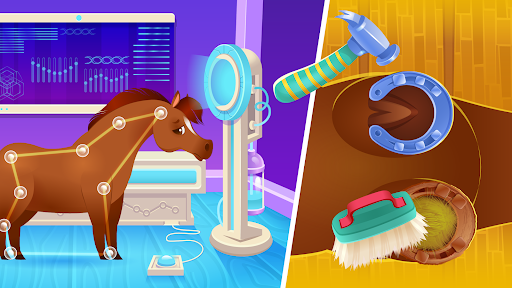
Pixie the Pony
Casual- Category Casual
- Size 47.18 Mb
- Requirements Android 4.1 and up
- Downloads 730,000,000+
- Package Name com.bubadu.pixie
- Content Rating 3
About Pixie the Pony Feature
Pixie the Pony is an enchanting and interactive mobile application designed for young children, particularly preschoolers. It serves as a digital playground where kids can engage with a friendly animated pony named Pixie. The app combines elements of virtual pet care, creative play, and simple educational activities to foster a nurturing and entertaining environment. With its vibrant, colorful graphics and intuitive, child-friendly interface, Pixie the Pony creates a safe and engaging space for children to explore, learn, and have fun. It stands out by focusing on positive reinforcement, gentle gameplay, and age-appropriate content, making it a trusted choice for parents seeking a wholesome digital experience for their little ones.
Chapter 1: Function
Pixie the Pony offers a suite of core functions centered around interactive care and creative play. The primary activity involves looking after the virtual pony, Pixie. Children can feed her, give her baths, and put her to bed, learning basic responsibility and empathy. Beyond caregiving, the app features a variety of mini-games and activities. These include simple puzzles, matching games, and creative tasks like decorating Pixie's stable or choosing her accessories. Another key function is exploration within the app's whimsical world, where children can tap on different elements to discover playful animations and sounds. The app also incorporates gentle learning elements, such as identifying colors, shapes, and sounds through interaction with Pixie and her environment. All these functions are designed with large touch targets and clear visual cues, ensuring that even the youngest users can navigate and enjoy the app independently, promoting a sense of accomplishment and joy.
Chapter 2: Value
The value proposition of Pixie the Pony lies in its ability to provide a safe, educational, and delightful digital experience tailored for early childhood development. Its key advantages are multifaceted. Firstly, it offers significant educational value by subtly integrating learning into play. The mini-games and interactions help develop essential cognitive skills like problem-solving, memory, and pattern recognition, while the caregiving routines teach empathy and the basics of cause and effect. Secondly, the app provides immense entertainment value through its charming character, responsive animations, and rewarding feedback system, keeping children engaged and motivated. A major advantage for parents is the complete absence of third-party advertisements and in-app purchases, creating a worry-free environment. The content is carefully curated to be non-violent and positive, reinforcing good behavior. Furthermore, the app's intuitive design empowers children to play without constant adult supervision, fostering independence and confidence. By blending nurturing themes with creative freedom and foundational learning, Pixie the Pony delivers exceptional value as a trusted digital companion that supports a child's growth and imagination in a secure setting.
Chapter 3: Scenarios
Pixie the Pony is ideally suited for preschoolers and children in early elementary school, typically aged between two and six years old. Its primary use cases are woven into the daily routines of young families. A common scenario is during quiet time or while waiting, such as at a restaurant or a doctor's office, where the app serves as a calm and engaging distraction. Parents often use it as a rewarding activity after a child completes a task or behaves well. It is also a popular choice for pre-nap or pre-bedtime wind-down, as the gameplay is gentle and not overstimulating. In educational contexts, preschool teachers might utilize the app during free-play sessions on a tablet to encourage cooperative play and sharing as children discuss their interactions with Pixie. For the child, it becomes a digital pet to care for daily, fostering a sense of routine and responsibility. Siblings can also share the experience, taking turns to feed Pixie or play a mini-game, making it a tool for social interaction and turn-taking practice within the family.